

May 30
By Sam Sheppard
I remember a conversation I had with one of my father’s friends about two years ago, in which he explained to me the fascinating holiday he’d just returned from. Expecting the most opulent of responses, I was somewhat shocked when he responded to my question of where he had visited. He had, in his own words, ‘done London’—a phrase entailing the sampling of museums, art galleries, historical sites, as well as more atypical places of interest. Drawn to the city by work, he had lived there for over twenty years without ever truly tasting its essence. It had turned out to be, as he put it, ‘remarkably tricky’ to entrench oneself in the place whilst perpetually distracted by career and familial aspirations.
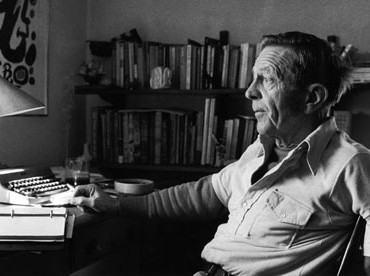
Listening to Will Self on the radio recently, I was reminded of this brief conversation when the subject turned to psychogeography. Self is a prominent exponent of this contemporarily flourishing academic phenomenon, which entails the exploration of modern cityscapes in a wholly non-linear fashion. Predominantly centered around London, the notion of linearity here refers to the commercial and consumerist imperatives spurning on modern cities, something we may well be consciously aware of, yet find ourselves largely powerless to swim against.
May 30
By Marie Kulik
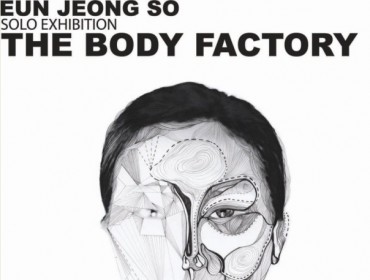
“Korean society asks women to have the same face, body and build, which has become people’s idea of beauty… Korean woman should be scared of completely losing their identity…” -So Eunjeong
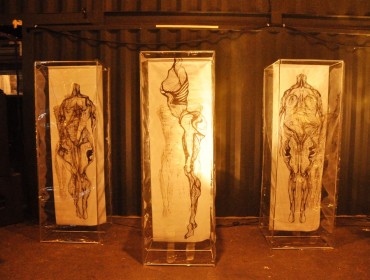
The May week of Monday the 23rd to Friday the 27th saw the Body Factory Exhibition at Platoon Kunsthalle in Gangnam Gu, Seoul.
The exhibition was designed and installed by fashion and art lecturer So Eunjeong. So is also the Creative Director at design house Dusty Goiyanni London, served as Illustrator to Alexander McQueen and is the Art & Cultural Editor at The Three Wise Monkeys.
May 30
By Scott Freeman
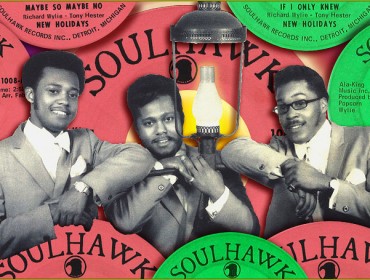
Hello and welcome to Funky Seoul Corner! My name is Scott Freeman (aka DJ Free).
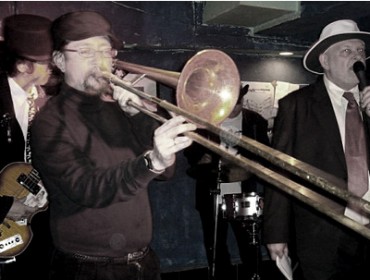
I have been living in Seoul, Korea now for many years teaching English, but one of my hobbies is to collect records, especially jazz, soul, and funk 45s. I currently have 550-plus 45s in my collection, and occasionally I have the opportunity to spin these tunes in various locations around Seoul. In so far as I know, I am the ONLY one in this city of millions who plays this kind of music out on vinyl. (I wish this weren’t the case because I would love to meet and collaborate with like-minded people!)
May 30
By 3WM

Robert “Bobby” Washkowiak battles his way through the bitter first winter of the Korean War, longing for home, his wife, and newborn son. Fifty years later, his son and grandson come across his wartime letters and together, they try to find out what really happened to him on one of the battlefields of that “forgotten war.”
Why did you write a Korean War novel?
It’s a question I am often asked.
It is usually asked by people who don’t know me too well, don’t know that I have been in Korea for as long as I have, or don’t know that from 2000-2003 I was covering Korean War commemoration events in Korea for the Korea Times.
Actually, the book I am working on now, at least a section of Waking up in the Land of the Morning Calm was going to be my debut book, albeit a non-fiction one when I thought about what kind of writing project I could do for the 60th anniversary of the Korean War.
May 30
By 3WM
The Three Wise Monkeys’ editors have been enjoying The New Yorker’s content for years. We’ve especially found its fiction podcast engrossing and entertaining as it provides exceptional access to some of the greatest short fiction read by a collection of writers. As summer approaches, we will be featuring selections with links for 3WM readers. Feel free to listen on to others in the collection.
Anne Enright reads John Cheever’s “The Swimmer,” and discusses it with The New Yorker’s fiction editor, Deborah Treisman.
Go to New Yorker and listen here. You can also read “The Swimmer” here.
May 23
By Josh White
Gwang Cheol Park saw his first public execution at 14 years old.
Park, now a 29-year-old North Korean defector and human rights activist living in South Korea, can’t forget the morning his schoolteacher made him watch a lineup of soldiers shoot a man twelve times. Being forced to witness public killings is part of a child’s education in the Democratic People’s Republic of Korea. It certainly taught Park to follow the rules.
But still, Park held a dream of the prosperity he might enjoy in China. He escaped from his famished country for the first time as a 17-year-old in 1998. In China, he couldn’t find work, but he learned a lot by unlearning the many lies about the outside world he’d believed his whole life. For example: He discovered that South Korea was a sovereign nation, and not, as he’d always been told, an American colony. Though he tried not to arouse the suspicions of neighbors and local authorities, he eventually was found out and forced onto a flight back to his homeland.
May 23
By Sarah Clow
Last week I found a list I had made about a year ago when living in Korea of pros and cons of staying in Korea versus moving to Costa Rica. One year later and I’m happily living in Costa Rica and glad with the decision I made. Looking back at my list, it seems most of the reasons to stay in Korea came down to comfort, ease and money. Reasons to leave were to find new challenges and to experience a completely different culture. Although I loved my year in Korea and embraced such things as singing in a small room, having seen the wrong side of a few too many bottles of soju, shedding my clothes in front of naked ajjumas and even growing fond of K-pop, I felt that one year was enough to enjoy such experiences and that the homogenous nature of Korean life would sooner than later begin to really frustrate.
May 23
By Mizaru

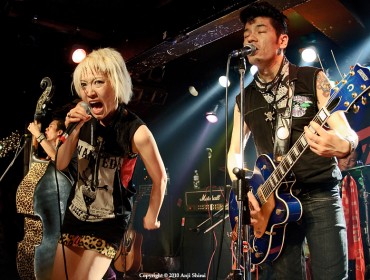
The persona of Velvet Geena, Tiger, Roy, Eddie Tarantula and Jack “The Knife” is both alive and inviting yet more than once I found myself looking away instead of zeroing in on the eye-contact that a small space like FF club invites… Perhaps I have never seen or felt the Korean blood pump and pulse in such unpretention. Loud rock ‘n’n roll can still be a scary moment. The greasy pompadour presence of the whole group wields out wildly like comic book heroes who are ready to cross the threshold of the stage, come to the rescue, give more life out to the audience then they can receive back. And in a rock ‘n’ roll or whatever to do on a Saturday night lexicon isn’t that the definition of charisma?
May 16
By Mizaru
Editor’s Note: This Spring edition of The HBC Fest is Saturday, May 21. This is an up updated guide to the venues and the Fest street. To get to the Hae Bang Chon Fest get out of exit 2 in Noksapyeong Station (Line 6—next to Itaewon). Walk along the wall of the army base and turn left in front of the gate past the Kimchi Pots and up the hill with Seoul Tower as the Maypole in the distance.
The HBC fest is happening on the dung-slope drag in Haebangchon which is just 50 feet away from my front door and that’s Ok because when I’m out on the street I walk the way I want to walk, yet, maybe that’s not Ok because so does everyone else. It is impossible to have a mannerly trek up and down the boulevard of slap-dash dreams. Everyone becomes an audience for everyone else. ‘Who is watching me… How am I going to get recognized… Am I carrying the right heat-seeking guitar… Should I have got a bigger dog to walk… Should I stop and let this car pass me so when I make a speech into my phone more people can hear my either commanding or fabulous voice?’
May 16
By Conor O’Reilly
A is for asshole/arsehole(Br.). The international laws of music festivaling determine that this scurrilous type gravitate towards music festivals and wreck all the nice people’s fun. If you are an asshole/arsehole who cares for the well-being of others’ festival experience, please stay at home.
B is for bars, booze, bands, and from a male perspective, a distinct lack of bras (or, I should emphasise, a lack of them off and waving in the air) – without which the HBC Fest will never emulate Woodstock, the festival and not the bar in Itaewon.
C is for cars which,
for some reason, still try to drive down main street Haebangchon despite the fact that they should really just park and come and enjoy the quality tunes and good people.
May 16
By Kate Knibbs

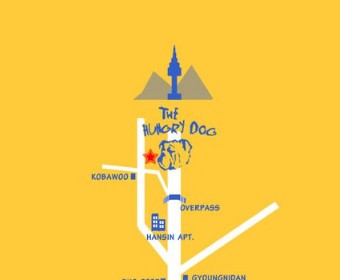
Last Saturday, I sat down at The Hungry Dog, HBC’s newest eatery, with a ravenous, sun-burnt clan of ex-pats. The Hungry Dog sits on Haebangchon’s main stretch, next to Pita Time. We almost overwhelmed the small, cheery restaurant’s limited table space, but the proprietors and staff Mj and Sunny took pains to accommodate our bulk.
The menu focuses on American foods: mini-burgers, sandwiches, hot dogs, and salads are their standard fare. They offer an all-day breakfast menu and a small dinner menu (dinner starts at 5). For dinner, there’s an intriguing souvlaki option, but we were too early to check it out. My infamously persnickety friend insisted that the lack of mayo in the condiments box be condemned; later, upon request, mayo was pulled out of the fridge for his fries. Critique revoked. The staff was very solicitous and friendly, and was open to altering the menu to suit our specifications.
May 16
By Jake Reed
This is Part 2 of Jake’s Chengdu travel. Read Part 1 here.
Chengdu might not be the frat party of China and maybe that’s a good thing. I would hate to think I went to a place just to sample the radial Dionysian outlets where the Sun rises in the East, sets in the West and what follows for me is another gripey hangover. Better to ask what was old China like in this neck of the woods? Well, Chengdu did happen to be in possession of the Tao which preceded Buddhism and is creating wonders still in effect today. Next to a KFC on any given street here you can yourself gazing into a lush garden tendered by skin headed, peace mongering Asians.
Recent Comments