

Mar 19
By Jesse Coy
At one end of the officetel it was the loud and angry assault on the door, while at the other end it was a flurry of motion, quick and efficient, as though well rehearsed. Mike’s former friend had already rushed past he and Reggie, swooping down to the floor to seize a satchel of personal belongings, and then upon a bookcase, which he had upended, stomping holes into its back at some point during his remodeling, he had sheets of paper scattered all about, possibly his new song. Mike could not be sure. Their host swiped the pages, unceremoniously stuffing them into the satchel. Finally he was opening the window. Mike could see that the screen in the window had been torn so that there was a gaping hole.
Jan 09
By Yi Nam-hui

Translation by Gabriel Sylvian
This is the final installment of this story.
Read part 1 , part 2 and part 3.
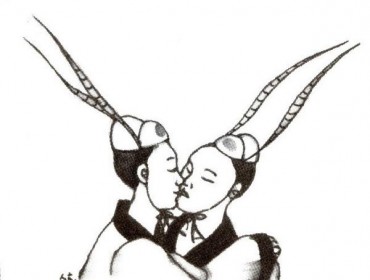
Eunmyeong brushed her teeth and put on pajamas. She buttoned the buttons properly up to the neck and turned off the light. Both had drunk alcohol, but they could not say they were drunk. Just as she was on the thresh-hold of sleep, Eunmyeong felt Chorogi silently reach her arms out and put them around her. She did not feel particularly threatened by this. It was not something she usually did with someone she was sleeping next to, but Eunmyeong enjoyed touching and patting, and she had always exchanged light cuddles with her same-sex friends. But when the cuddles gradually turned into sexual gestures, Eunmyeong was thrown into confusion. She hesitated, not knowing what to do, but she ended up not saying anything at all. On the one hand, she felt embarrassed as she gave her passion to those outstretched arms, and on the other hand, Chorogi also said nothing.
Eunmyeong found out later that Chorogi enjoyed sexual encounters in which she could break some new taboo.
Dec 26
By Jessie Coy
Part 1. Part 2. Part 3. Part 4.
That Friday, as soon as classes ended, Reggie and Mike went to the nearby subway station for the forty-minute ride to the Sasong stop, where one of Busan’s bus terminals was located. Subway riders at this time of day were many. Yet luckily (or so it seemed) the stop at which they got on the subway was only a few stops before one of the popular transfer points, where most subway riders exited, only to be displaced by an equal or even greater number of transfer riders.
Dec 19
By Yi Nam-hui
At the end of last year, designated as “Literature Year,” there was a small fracas in publishing circles. A novel had come out with the provocative title, Try to Do as I Do. It got attention because the book was full of sexual descriptions from beginning to end. It was the sort of book rarely seen in the publishing world. The author, who went around repeatedly saying he had intended to write a porno novel, was not in the country then, but the authorities were seeking judicial means to have the book banned. A year-long offensive and defensive battle ensued as to whether the book was smut or art. The issue was taken up in a public debate on the topic of “Sex and Liberation” held at a live performance theater as part of a big cultural fest. The event was really typical of that period. It was a pretty fiery scene. Everyone demanded to have a voice in the debate, and contradictory opinions existed even among those opposed to judicial handling of the case.
Nov 21
By Yi Nam-hui
Translation by Gabriel Sylvian
Editor’s note: This is the second of several parts of Yi’s short story. Read the translator’s overview of the author here.
Read part 1.
Time Out was as different from Heaven Dust as the dirty back streets of Seoul Station are from the ritzy Apgujeong District. If Heaven Dust was a café atmosphere with natural wood flooring and plastered walls, Time Out was absolutely filthy from the first step down its front stairs. The walls of the stairwell were covered with a dizzying array of spray-painted graffiti and a mesmerizing criss-cross of slogans that recalled Rimbeau or the Surrealists: “Just gotta be modern!” “I’m an anarchist at heart!” “Kick out the zombies!” Inside, it was like walking on moon craters—your feet never completely touched the floor and every step made a rustling sound. A young man with yellow hair gelled up into large spikes was seated on the landing collecting entry fees.
Nov 07
By Gabriel Sylvian
Amidst rigid familism, strict gender roles and moral orthodoxy often equated with national identity and “national sentiment,” LGBT life remains hidden from public view in Korea. Until very recently, to be full citizens in society men and women were expected to marry and have children to carry on the family line. In a gender system adhering to the dictum that “good ceremonies make good people,” gender and sexuality are policed through marriage, at least superficially, into prescribed gender and sexual roles determined by biological sex. Of course, the rigidity of compulsory ceremonial heterosexuality does not make for happy arrangements in the emotional lives of gay men and women and their spouses. One elderly Korean interviewee told me, for example, that in decades of marriage to his wife, he had sexual relations with her on three occasions, each conjugal union producing one offspring. While representing an extreme example, such testimony points to another imbalance. While Korean gay males have enjoyed the freedom of sexual release through furtive meetings at gay saunas and bars on the weekends, the muted sufferings of the women who married them go unspoken.
Nov 07
By Yi Nam-hui
Translation by Gabriel Sylvian
Editor’s note: This will be the first of several parts of Yi’s short story.

“Heaven Dust?”
Eunmyeong cocked her head sideways every time she saw the sign, thinking how odd the two words sounded together. Heaven and …Litter? … Litter from Heaven?… or maybe…. a Heaven of…. Litter?………… There was only a blank space separating the words. Maybe it did not matter how you read them.
If you walk straight down Picasso Street from the front gate of Hong’ik University, you find a Buy the Way convenience store sign. “Heaven Dust” was the name of the live music club hidden away on that corner. The club’s sign resembled the Coca-Cola logo, with the club name in big red letters against a white background and the words “Alternative, Punk, Grunge” appearing at the top in tiny script. The first time the sign caught Eunmyeong’s attention, it wasn’t heaven and litter that came to her mind. She had imagined a desert. A desert swept over with yellow sand and inundated with dust. She could not open her eyes. It was a howling wilderness, the wind unfurling her hair as she stumbled to the right and to the left, its thunderous roar blocking her ears.
Oct 10
By Kenneth McIntyre
Hello?
Yea
Don’t ask for money
It’s mine
You’re a fucking bum
You’ve told me that for 30 years
You’re a liar
and
you
don’t
even know it
That’s not true
Sep 19
By Jesse Coy Nelson
There were so many points in life that once having relevance for Scott now held little importance. Part of the reason for this was because he came out of his recent concussion with the inescapable feeling that he had lost something.
What did he care for teaching? Was it as his father labeled it?
“You’re running to the other side of the planet to avoid taking on the full responsibilities of real life. You’re delaying.”
While such a sentiment coming from an ignorant man who might very well mistake France for China or vice versa on a world map, who had no interest in anything outside the U.S., normally carried little weight with Scott… yet the truth was, he had never aspired to be a teacher. It was not his goal. Perhaps it was like what Cap said? Cap was in his mid-fifties, a regular fixture at Mandy’s, an expat bar in Changwon. Cap had his philosophy down pat when it came to foreign teachers in South Korea.
Sep 05
By Mizaru

In 1948 Korea competed at the summer Olympics in London, England winning a bronze medal in both men/s weightlifting and middleweight boxing. The division of Korea was not yet complete as South Korea was establishing itself as a sovereign nation and the two narratives of those athletes surely would serve as interesting profiles of character. In 1948: Graham Greene, Norman Mailer and John Steinbeck published weighty novels. Also published were, Thomas Merton’s autobiography turned spiritual treatise, The Seven Story Mountain, and T.S Elliot’s’, Notes Towards the Definition of Culture. It was a pretty essential year for the written word in English.
‘So why stop reading if you are going to write?’ is a maxim not so popular with today’s new age hothouse writing culture in full bloom. But, while wondering about the literary boosterism coming out of a small corner of Korea’s pop-culture blast out to the world, I have picked up J.D. Salinger’s “Nine Stories,” also published in 1948…
Aug 29
By Samual Sheppard

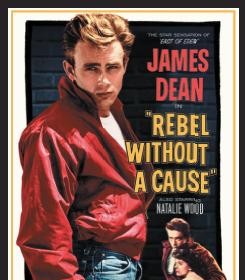
I could be James Dean in Korea,
My tongue’s the source of my powers.
But I don’t have much time for the language,
If I’m drinking for forty-eight hours.
The school pays the rent for my housing,
It’s their fault if something’s amiss.
Granted the means to live better than most,
I still come home smelling of piss.
I feel like James Dean in Korea,
Jul 12
By Mizaru

A review Of Nanoomi/Subject Object Verb’s Quest: Does Asian America Need a Brand Makeover?
Editor’s note: Before the racial flagellation comes my way, no I am not a Korean National or a Gyopo. I am American in fact a hyphenated Irish – American who understands indentifying with more than one place at one time. We are all Midnight’s Children living through different allusions at the same time, and as it’s been said it is not where you were born but where you belong and now I live in Seoul.
In a recent editorial I read on the Korea promotional site Nanoomi I was intrigued and finally flummoxed by the consideration and proposal that in order to get Korean soft power (i.e., books movies, pop-music, TV shows and the like) out to a worldwide audience a sort of Asian Creative Agenda should be established. “Does Asian America Need a Brand Makeover?” The idea is …
Jun 07
By Jesse Coy Nelson

Part 1 is here and part 2 is here.
“No, I’m Jon!”
“I’m Jon!”
It started with the new arrivals to the hagwon, a pair of boys who looked identical, with bowl-shaped haircuts, and large, round glasses. Within two days, their renown far surpassed that of Peter and Bobby, the English nicknames of two other students at the hagwon who were also twins, but not identical twins, like these new arrivals. How could a pair of twins such as the two of them, biovular twins not from the same egg, compete with the allure of real, identical twins? The answer was that they simply couldn’t.
May 30
By 3WM

Robert “Bobby” Washkowiak battles his way through the bitter first winter of the Korean War, longing for home, his wife, and newborn son. Fifty years later, his son and grandson come across his wartime letters and together, they try to find out what really happened to him on one of the battlefields of that “forgotten war.”
Why did you write a Korean War novel?
It’s a question I am often asked.
It is usually asked by people who don’t know me too well, don’t know that I have been in Korea for as long as I have, or don’t know that from 2000-2003 I was covering Korean War commemoration events in Korea for the Korea Times.
Actually, the book I am working on now, at least a section of Waking up in the Land of the Morning Calm was going to be my debut book, albeit a non-fiction one when I thought about what kind of writing project I could do for the 60th anniversary of the Korean War.
May 30
By 3WM
The Three Wise Monkeys’ editors have been enjoying The New Yorker’s content for years. We’ve especially found its fiction podcast engrossing and entertaining as it provides exceptional access to some of the greatest short fiction read by a collection of writers. As summer approaches, we will be featuring selections with links for 3WM readers. Feel free to listen on to others in the collection.
Anne Enright reads John Cheever’s “The Swimmer,” and discusses it with The New Yorker’s fiction editor, Deborah Treisman.
Go to New Yorker and listen here. You can also read “The Swimmer” here.
Recent Comments