

Expat Art Careerists launch vol.1 of CONCRETE EXPERIENCE: Transposition
There is a tried and true Irish myth-lore that goes “when you want to be the career-man then you will find a ladder in your travels… at the top of the ladder will be a noose.”
On Friday night, April 15 at Laughing Tree Gallery along the up-top on the dung slope drag of Haebangchon, another expat in Seoul culture project was launched: Concrete Experience. It defines itself as,
Concrete Experience is a journal of contemporary photography and creative writing, published quarterly and aimed at pushing innovation in the way we think about the world around us through carefully curated interactions between diverse approaches to a common theme.
Three cheers to that as I dropped a business card from BestCheapAirTravel into page 59 of Hemingway’s “The Sun Also Rises” and closed it.
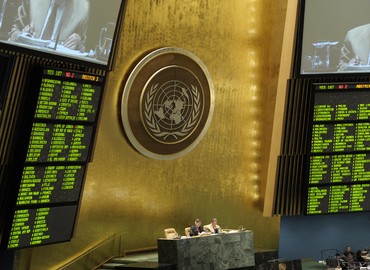
By Elena J. Not all meetings I attended revolved around such problematic and arduous issues such as Cuban embargo crisis. Some meetings were idealistic, targeted at youth and children to offer hope for a better future. The meeting held on the International Day of Peace Student Observance sought to “harness the energy, imagination, and initiative of the world’s youth in overcoming the challenges facing humankind.” This year’s theme was “Dialogue and Mutual Understanding…aimed to encourage dialogue and understanding across generations, ….(and) to encourage young people to dedicate themselves to fostering progress, including the fulfillment of the UN Millennium Development Goals.”
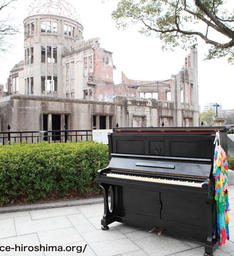
I had been unaware of the meeting; most of the interns decided to go at the spur of the moment when one intern found an article in a New York City local Korean newspaper on Yuna Kim’s participation in the event. As I entered the conference room, a very aged and somewhat unattractive piano accompanied a Japanese youth choir.
On May 16, 1961, Korea experienced a coup that left the nation under the control of a military government. This new government saw the movie industry as a business that needed to be fostered and protected and it was believed that stronger regulations would provide a means of reform. To this end, the Motion Picture Law was enacted in January of 1962 which contained some very strict rules and regulations. Believing in an expression similar to ‘too many cooks spoil the broth’, the government hoped to consolidate the number of production companies by making the new laws difficult for smaller companies to comply with. Thus it was that the 71 companies in existence before the law was enacted were reduced to just 16.
By Jesse Coy
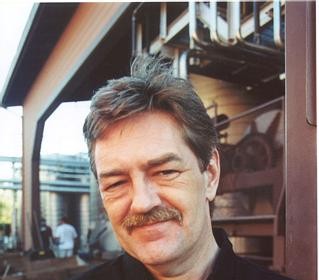
It’s March 10, and damn, I’m on the bus to Seoul, where I can finally see one of my favorite bands from high school, this time with their primary (not original, Paul… I know) singer, Bruce Dickinson, who flew the 747 in country.
Up the irons, mother fucker!
So I’m psyched. I’m also grinning happy that my current girl, the sweet BlueKat, will apparently be there to meet me in the wee hours of morning when I return to Masan after the show. I’m about a half hour from Seoul now, listening to “Blood Brothers.” Yes, I cheated and peaked at the set list. Iron Maiden will be playing a lot of new stuff. Who knows? Maybe I’ll look at it differently. There’re a few songs from the new one that I quite like. Anyway, for two nights in a row I had bad sleep.
The Association for F-Class Expatriates within Korea (AFEK) has opened up its doors to all expats in Korea. The association, founded in May 2009, has grown exponentially since its inception, and now prides itself on being the largest expat support network in Korea.
With this expansion, the best components of AFEK will now be accessible to all expats living in Korea. These components include the AFEK library of over 400 documents available for download, and a directory of weblinks. Not only will all visa types be able to easily access these resources, but will be able to add to the resources already available.
By Elena J.
Every winter and summer break, my college, Yonsei University, offers a program called “Global Career Tours,” arranging trips to companies in major cities such as London, Hong Kong, and New York. Essentially, students get a firsthand look at the future jobs they’re considering.
Last August, about 15 students (I was one) had the opportunity to visit diverse companies and organizations and meet employees working in different fields. Students had the chance to listen to two Korean American bankers’ stories of how they came to work for ING, to walk around the hectic trading floor of JP Morgan, meet ABC’s Juju Chang and take part in the live audience of Good Morning America, to ask questions about graduate school opportunities to the dean of Fordham Law School, and to converse with lawyers from White and Case, an international law firm.
By R.M. Adamson The early spring shower that fell outside my window on Thursday, April 7, was radioactive, or so I was told. Here in Korea, about 130 schools decided to close, and at others parents clogged the streets by driving their kids to school rather than letting them walk in the rain. I didn’t have any appointments that day, so I stayed in, but I wasn’t worried. The prevailing wind patterns have sent most of the radiation across the Pacific, so it’s most likely that my people back in California got a bigger dose than I would have here in Seoul.
The cherry blossoms are starting to bloom in this part of the world, and these are the weekends when many couples will stroll beneath the trees with a romantic partner, reinvigorating a relationship or making an attempt to build happy memories. Shintaro Ishihara, the mayor of Tokyo has expressed his view that the usual hanami tradition of drinking sake with friends beneath the boughs and among the falling petals would be unseemly this year and disrespectful to the wandering spirits of so many thousands dead beneath rubble or washed out to sea.
The first animated films in eastern Asia were the British-made Colonel Heeza Liar series of short films imported into Japan beginning in 1914 where they proved to be quite popular. While in 1914, only 6 cartoons were imported, by the following year, that number had increased to 22. It was just shortly thereafter, in 1917, that the first Japanese animated film appeared called Imokawa Ryozo: Genkan-ban No Maka, directed by Hekoten Shinokawa. Also, that same year several other Japanese animated films were created and released in theaters such as Junichi Kouchi’s Hanahekonai Meitou No Maki (The Fine Sword) and Seitaro Kitayama’s Sarukani Garen (The Apes Vs. The Crabs). By 1921, Japan had already developed a studio solely devoted to the production of animation and in 1932, Kenzo Masaoke made Japan’s first talking animated film, Chikara To Onna No Ya No Naka. It was a great accomplishment, coming just four years after America’s first talking animation, Steamboat Willy.
By Jesse Coy
This is later, and boy, was I happy that I took the 1 p.m. and not the 2 p.m. bus. First, I hadn’t noticed, but the show was at 7, not 8. Second, when Eric Clapton says that his show starts at 7… well, he’s a punctual guy. I might have missed half of the first song. I was assisted to my seat as Eric was in the midst of Willie Dixon’s much covered “Hoochie Coochie Man.” And speaking of being assisted to my seat, I needed that, because compared to all the other shows that I saw at the Olympic Stadium, this one looked to be nearly sold out. I saw no empty seats. Did I miss “Key to the Highway”? I know that I heard him do “Goin’ Down Slow,” which I think is a switch from his set list. That song was second, and not third, in other places.
By Jen Lee
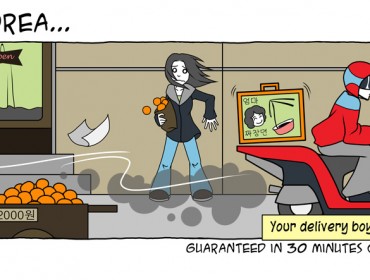
If you walk the streets and sidewalks of Seoul, then you know that there’s always a quick moving and often on-you-before-you-know-it threat. The “autobike.”
The deliver in 30-minutes rule for delivery men was recently abolished by Pizza Hut after several drivers’ deaths. The reckless operation is endemic among riders who often ride sans helmet zigzagging brazenly as they go.
By Iwazaru
The recent string of suicides at the Korea Advanced Institute of Science and Technology (KAIST) provides South Korea with the opportunity to discuss the larger problem of suicide here—according to 2008 numbers approximately 35 people commit suicide a day. The total is well over 10,000 a year putting Korea in first place among the OECD and nearly double the average. When added up over the last ten years, Korea has lost some 100,000 of its people to this silent epidemic.
Yet during my years here, I’ve heard little in the way of serious discussion about this killer. Normally someone’s suicide is given short shrift—done one day and swept away the next, an ethereal exit. Even when people of stature decide to end their own lives—former president Roh Moo-hyun, actress Choi Jin-shil, Lee Yoon-hyung (daughter of Samsung’s CEO, Lee Gun-hee)—, the event is ushered out the door as soon as possible.
By Mizaru
It’s the new again Phillies opening night Saturday, April 2 and I have plans to show the place to John Thang. John’s a political refugee from Myanmar living on the fringes of Seoul. I have known him for about six months and we’ll meet tonight at a place I have been coming to for about six years.
The new again Phillies prides itself that it is an OB bar– “We don’t serve no stinkin’ Cass,” was the first thing I heard and wrote down in my notebook that night. And next:, Gin and tonics for 3500 won and Vodka juice for 4000. There are subtleties to Phillies now like there is no absurd propaganda, paraphernalia, or pamphleteering on the clean walls.
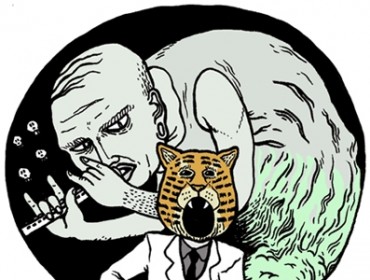
By Tiger and Bear with illustrations by James Wilson
Given the night’s events we felt it was only right to follow through and proceed to some form of after show debauchery. Determined to find a soiree of some description and resolute that we would not be returning to our room, we walked the white washed corridors of the hotel we’d been placed in, searching for some entertainment. After walking down a maze of corridors we latched onto a trail of cackling and guitars. We followed theound to a door and began slamming our fists against it. A shy Korean girl answered.
“Party?” Bear asked.
Before she could even respond we barged past her, into what could only be described as the weirdest after-party in the known universe. The room belonged to Sapphire Crucifix, a Korean folk rock band. The band appeared to be made up of students, with the exception of their flute playing leader; an emancipated middle-aged salamander who made it back to this life in an upright form.
By Sam Sheppard
Overwhelmingly, at least until the earthquake struck, the Koreans I met chose to ignore Japan as much as possible, whilst the Japanese seemed to have grown used to life without the Hermit Kingdom. From this perspective, it is worth remembering that they did, until relatively recently, move in very different circles. Being the first Asian nation to industrialise, the Japanese have been a prominent international force for many years, only joined by Korea in its capacity as an ‘Asian Tiger’ with high living-standards, education levels, economic growth, and technical proficiency, from the late-twentieth century onwards.
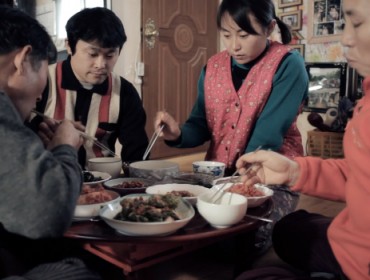
This video was shot on a small farm in Jeollabuk-do province in February 2011. The storyline was conceived in response to the song lyrics which tell of an unrequited love that can’t be satisfied. The concept: A brother and sister who are twins who have grown up lived and worked together on their parents’ small farm. They are confused and disturbed that their closeness has developed into a kind of sexual longing that they know they must hide.
WP Theme & Icons by N.Design Studio Copyright 2011 The Three Wise Monkeys - Editor-in-Chief: Eun-jeong So, Deputy Editor: Scott Soper, Executive Editor: John M. Rodgers, Webmaster: Jason Scott Burnett, Lead Translator: Dae-hyun Ji, CEO: Mr. J. Grimwood
(Seoul City Hall Press Registration Number: 아01534)(Business Registration Number: 211-09-32328)
Recent Comments