

Jan 02
By Seon-Myung Yoo
Before the Kim-jang
Jin-Ok Hong, 51 years old, is scurrying through her house, vacuuming, wiping, washing the dishes, and doing the laundry. While the washing machine tosses and turns the laundry, Jin-Ok squats down in the bathroom to scrub the floor and walls extra carefully. Then, she prepares a simple lunch for herself before her siblings arrive for the annual kim-jang.
Kim-jang, is the process of making kimchi for the winter. Historically, Koreans have pickled their cabbages and radishes toward the end of the fall after harvest in preparation for the winter. The tradition is preserved into the modern contemporary Korea. The women of the family get together every year to go through the various stages of kimchi-making at a large scale.
Nov 28
By Stella Jang
Every time there is an important election, campaigns are held all over the country in order to encourage youths to vote. This kind of apathy towards politics is considered a serious problem since the very group of people from which some will have to be political leaders and the others will have to determine the country’s future by either supporting the leaders or criticizing them is alienating itself from reality. This way, only a few people who are deeply concerned about politics will take up the role, and the world of politics will become polarized by these extremists.
However, in order to get young people to vote and be interested in politics, politicians themselves must prove that the world of politics is not a place of incessant senseless battles. One of my friends pointed out that politicians must stop waging a war between the conservative and the progressive, but seek actual solutions to problems in reality such as the unemployment crisis or financial difficulties.
Oct 04
By Soorin Kim
Ever since I can remember, my dad wanted me to become a journalist like him. I said no. I knew nothing about being a journalist except for the fact that they deliver news for us. When I said I wanted to be a cartoonist, he asked me if I would like to become an editorial cartoonist. For me, editorial cartoons weren’t beautiful enough. I was just a kid who wanted to live doing what I liked in a quiet world.
However, when my dad was suddenly sent away to KBS Ulsan, something inside urged me to look more into what was happening here. I was in the middle of an exam period, but it didn’t matter. I closed my academic books and looked into why dad was gone. During this I discovered the dirty backstage and the complete situation. The new president Lee and his loyal pack of wolves, including the new CEO of KBS, wanted to retaliate against my dad for disclosing their dirty pasts during the election period, and to deter any further criticism. They wanted to silence him. Having exposed several secrets of the authorities of the nation such as the supreme court judge’s tax evasion that eventually got him to resign and the current president Lee’s cabinet nominees’ real estate corruption, he indeed was the sharpest pain in the neck for them.
Jun 13
By Ji-Hyun Kim
I am a second-year college student who, like everyone else in Korea, has been keeping an eye on the current situation regarding tuition and the demonstrations that have been taking place in Seoul. Personally, my father was one of the people who led the protests against the government back in Korea’s chaotic 1980s. It seems like my grandfather was worried that the “blood” might be running through my veins because he called a few days ago and asked me if I was joining the protests. I said, “No grandpa, I was not on the streets, I’m not on the streets, and I don’t plan to go, either.” And I did not say that to comfort the old man.
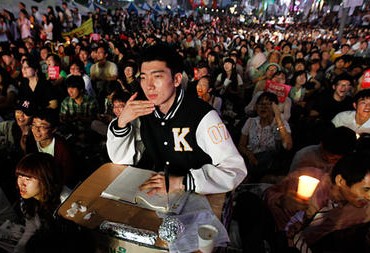
Yes, we all want lower tuition, but not in this way. My university is one of the four universities that went out to Gwanghwamun on the night of June 10th as the “representatives.” Beforehand, the student government officials held a vote asking students to choose whether or not classes should be boycotted on the afternoon of June 10th in order to attend the demonstrations. Simply, did we want to skip class for the cause? The participation rate didn’t reach 30%.
Apr 25
By Elena J.
Not all meetings I attended revolved around such problematic and arduous issues such as Cuban embargo crisis. Some meetings were idealistic, targeted at youth and children to offer hope for a better future. The meeting held on the International Day of Peace Student Observance sought to “harness the energy, imagination, and initiative of the world’s youth in overcoming the challenges facing humankind.” This year’s theme was “Dialogue and Mutual Understanding…aimed to encourage dialogue and understanding across generations, ….(and) to encourage young people to dedicate themselves to fostering progress, including the fulfillment of the UN Millennium Development Goals.”
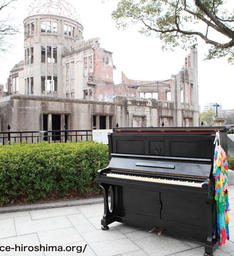
I had been unaware of the meeting; most of the interns decided to go at the spur of the moment when one intern found an article in a New York City local Korean newspaper on Yuna Kim’s participation in the event. As I entered the conference room, a very aged and somewhat unattractive piano accompanied a Japanese youth choir.
Apr 18
By Elena J.

Every winter and summer break, my college, Yonsei University, offers a program called “Global Career Tours,” arranging trips to companies in major cities such as London, Hong Kong, and New York. Essentially, students get a firsthand look at the future jobs they’re considering.
Last August, about 15 students (I was one) had the opportunity to visit diverse companies and organizations and meet employees working in different fields. Students had the chance to listen to two Korean American bankers’ stories of how they came to work for ING, to walk around the hectic trading floor of JP Morgan, meet ABC’s Juju Chang and take part in the live audience of Good Morning America, to ask questions about graduate school opportunities to the dean of Fordham Law School, and to converse with lawyers from White and Case, an international law firm.
Mar 14
By Stella Jang

On February 7th, I graduated from a foreign language high school in a rather mundane and boring ceremony, the only highlight being when the boy who was chosen to give a speech to the graduating class—he was a student from the program in our school that prepares students to enter universities abroad—broke away from his scripted Korean address, which was rolling on a giant screen at the front of the auditorium, into a humorous rant in English that criticized the school and had teachers scowling.
Feb 28
By Elena j. (with insights from Angel R.)
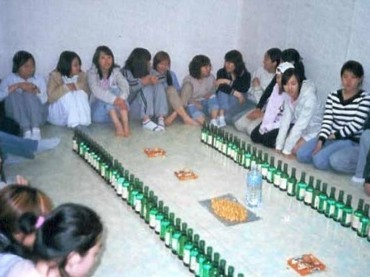
Similar to the majority of 600,000 students that took the Korean College Entrance Exams last year, I held an image of college life that was a crude botch of images glued together by the media and tales from incumbent college students. College was a place where one could party, drink all night, throw up, and still look as glamorous as Jun Ji-Hyun did in “My Sassy Girl.” Girls would finally be able to wear heels, makeup, and get a perm, whereas guys would be able to dye their hair and drink to their heart’s content—indulgences prohibited for them until now. College also seemed like a place of absolution—once they had the acceptance letter in front of their eyes, most parents would relent to anything. ANYTHING—from fancy European tours to an expensive new wardrobe, because for Korean parents, having kids in college (and a “good” one in the capital city) contributes greatly to family honor, elevates the child’s social status later in life, and never fails to arouse envy among the ajummas at the local jjimjilbang.
Dec 13
By Flora Lee

Just to briefly describe the life of an average gosam: he/she gets to school by 7 to 8 a.m., and does practically nothing other than study, study, study until midnight or more—at school, at home or at private study rooms that cost quite a lot. In reality this brutal slog begins as soon as final exams end in one’s junior year if not as soon as the exam is taken by seniors (many students set a “D-Day” countdown application on cell phones or computers at 365 days and follow the countdown by days, hours, minutes and seconds and the rest can’t escape constant reminders from friends, teachers and parents). For students who wish to enter a prestigious university—called SKY here indicating Seoul National University (Korea’s Harvard), Korea University (Yale perhaps) and Yonsei University (maybe Oxford)—the competition gets fiercer, the strongest enemy being yourself. Imagine all that effort being judged on one single day. One mistake, and you could be stuck not in a university dormitory but in Gangnam-Daesung or Jongro Yongin Campus two famous academies for jaesusaeng—to all gosams, being put on the jaesusaeng list and spending another year in hell is a terrifying punishment (sadly 150 thousand students ended up victims of it last year alone).
Dec 06
By Teen Journalist Matt Choi

There you are. A gray cement building is standing and there you are. You are staring at a person who is standing on the roof of the building and he seems that he doesn’t know where he is. He keeps moving and finally stops just one step before the air. Then you look into his eyes that don’t know what they are looking back at and you see the pain.
Korean Teenage suicide is a serious problem. According to some reports, the rate of suicide cases is higher in Seoul and in the capital areas than other regions. Ironically, students who give up their life often get high grades in school and could well be on their way to be success. None of it can make sense to me. I can see reclusive students at school and I want to reach out to them but they just have this wall around them while the social, smiley happy-go-lucky students have a different field of energy around them which makes it is easier to be around them. I don’t know why reclusive and being alone is bad.
Nov 08
by April Kim

This is what some people feel like about the the G-20 meeting: president mouse invites nineteen foreign mice to his mouse hole where a lot of mouse police are scurrying around on high alert. Two men, one of them a university professor, reportedly went as far as to go around painting rats on G-20 posters (see pic on right) supposedly as an “act of humor.” President Lee Myung-bak has been called “Gee,” a word meaning mouse (or rat) in Korean, by those who think he serves only the rich (and because he may share some facial qualities). So speaking of “G”-20…..
Sep 20
By teen journalist Matt Choi

According to recent research, South Korea is the second highest scoring country of average high school academic test scores. The result of the research brought a huge boost in respect for our education model.
However, in the same research, South Korea also ranked the lowest in the category of happiness for students. I believe Korea is not an advanced nation in education yet. There are many contradictions that point to why we have an undeveloped education reality in our developed country.
Sep 13
By Elena j. (with insights from Angel R.)

At university, “Meetings,” in the Korean sense, are not just any equivalent to any gathering; they explicitly refer to group blind dates. Sogaetings are one-on-one blind dates, which sometimes can become more intimate or awkward. In a meeting, one of the most popular events among freshmen, one mediator, or broker, introduces his or her group of friends to another group of friends of the opposite sex. The two groups meet for dinner, introduce themselves, and head for a bar after the meal. At the bar, everyone opts for drinks and after a few glasses, the mood lifts and people start to feel closer. Though some people may receive “Afters,” or continuous calls from a person who is interested, in general, meetings are considered very casual get-togethers.
Sep 06
By Elena j. (with insights from Angel R.)

Similar to the majority of 600,000 students that took the Korean College Entrance Exams last year, I held an image of college life that was a crude botch of images glued together by the media and tales from incumbent college students. College was a place where one could party, drink all night, throw up, and still look glamorous as Jun Ji-Hyun. Girls would finally be able to wear heels, makeup, and get a perm, whereas guys would be able to dye their hair and drink to their heart’s content—indulgences prohibited for them until now.
This hasn’t exactly been reality and the ten points below, based on my observations and experience, are part of a candid record and for future students, will hopefully be a possible guide on surviving the first semester at a Korean university.
Recent Comments