

Apr 09
By Ben Cowles
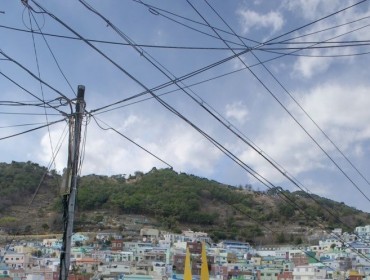
After canning it up the hill at what must have been record speed, I couldn’t get off the mini bus fast enough. The nausea eventually subsided as I peered down at the sloping, vibrant neighborhood of Taeguk Village*(태국마을). The colors and short stature of the buildings were a stark contrast to the grey tides of the city we left behind. The necessitous of the town only added to its charisma. Wandering the narrow alleys between the brightly colored, tightly packed shabby homes of the hillside village, I felt as though my girlfriend and I had been transported to the third world.
The brochure/map for Taeguk village likened itself to the picturesque Greek island of Santorini. However the sloping view of the sea was where the similarities ended for me. I thought it typical of Korea to big up this village by comparing it to the exclusivity, luxury and pretensions of Santorini. I reckoned a more honest comparison would be with the slight less marketable favelas of Rio. But then, who’s going to slam “Shanty town” on their tourist paraphernalia?
Feb 13
By David Wills
During my three years in South Korea, there wasn’t much the locals would say to me about China that wasn’t overwhelmingly negative, bordering on the outright racist. Even the very youngest students would tell me about the “dirty” Chinese, who sit around watching each other defecate, stopping only to eat babies or steal something from Korea. Of course, Korea isn’t exactly a land of open-mindedness and enthusiasm for its neighbours. Even by the standards of Asia – where animosity between nations is commonplace – Korea is notable for its xenophobia, its paranoia, and its sheer contempt for people that look, act, or speak differently to those of the one true bloodline.
Yet it surprised me when I arrived in China and found that the opinion of Chinese people towards Korea and Koreans (and I’ll state now that I’m definitely referring to South Korea, rather than China’s ally up North) was unanimously positive. Now, I can’t pretend to have taken a sampling of the population as a whole, but I have taught in China for a year and a half, and could count more than five hundred people having told me about their fondness for all things Korean.
Feb 06
By Iwazaru
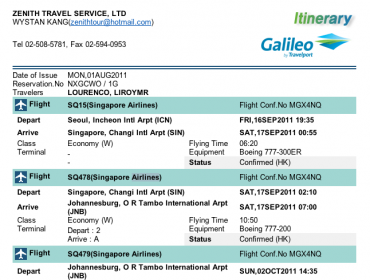
How do you stop a scammer? You contact the police, present evidence of the scam and wait for justice to be served, right? Unfortunately that justice may be–and usually is–slow to arrive, if it ever does. The system has to do its work as the judicial machine chugs or sputters along. Such is the current case with Wan-koo Kang (aka Wystan, aka Joseph Kim), the man behind a travel scam that appears to have stretched on over years, raking in tens of thousands of dollars, ruining people’s “scheduled” trips sometimes leaving them ticketless at the beginning of a planned journey or stranded in the middle of a trip with no return ticket. That is until victims began to mobilize and attention turned to Kang’s brazen chicanery.
That attention led to the initial September shutdown of Kang’s Zenith Travel agency and his October arrest (though the court decided not to detain him). But the snake slithered on, continuing his dirty dealings under both his original name and the pseudonym Joseph Kim–Kim worked at the new Expert Travel in the Songpa District of southern Seoul. Brazenly and some would say, stupidly, under the name Kim, Kang sent out an email advertisement for Expert Travel’s “Cheapest Air Tickets” to more than a hundred people, including people he’d scammed while working at Zenith Travel.
Jan 16
By Iwazaru
If you’re planning on travelling this winter pay very close attention to whom that travel agent is claiming to be able to get you “Real Cheap Travel.” The clues will be rather obvious: he goes by the name Wystan Kang or Joseph Kim; he works for Zenith Travel or Expert Travel; he promises he has a great fare lined up for you to Palau, Hanoi, Bangkok, Fukuoka…anywhere; you need to wire the amount to his bank account before you can get the ticket; days start to pass and he’s not getting back to you; The ticket may have some trouble, he tells you (or maybe he doesn’t and you end up at the airport where you’re informed the ticket has been cancelled); he can’t return your money; he’s very sorry.
This is the story that dozens of expats have to tell stretching back many months. Yet there had been a hint of justice in Ocober of 2011 when Wan-koo Kang (aka Wystan, aka Joseph Kim) was arrested, had his business license suspended by the Seocho District Office and the doors of Zenith Travel were closed. The case then went from the Seoul Metro Police Agency’s International Crime Investigation Department to the East Branch of the Seoul District Prosecutors’ Office where it is ongoing now. Reportedly, Kang was taken before a court after his arrest where the judges determined that he would be released without detention while the case proceeded.
Dec 12
By Iwazaru
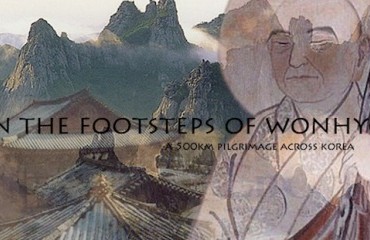
Seven full days into the more than 400 kilometer pilgrimage across the Korean peninsula in an attempt to trace the footsteps of 7th century Buddhist monk Wonhyo, the members of the trek have changed, the leader, Tony MacGregor, has taken a dangerous fall, Koreans have stepped forward with immense generosity and the road has provided its good share of challenges and rewards. All the while Macgregor, Chris McCarthy and Sangmin sunim, a Buddhist monk who’s joined the pilgrims, have pushed on sometimes joined by professor David Mason.
On Saturday, December 10, MacGregor was happy enough to answer some questions about the journey while settling in after a dinner at Muryang Buddhist Temple in Yeongyang. Among the many things he said, one stood out toward the end of the interview when he offered that each day was a “stepping into the unknown” which he was actually enjoying.
See here for the original story about the pilgrimage and visit the official Site where the pilgrims post pictures and words each day.
Nov 28
By Mizaru
In the sun cased morning Sokcho is just like it’s supposed to look. The pretty blue colors on the main Yeonggeumjeong promenade offer a seaside recharge led by aquamarine everything and everywhere. Sea Women were friendly and demonstrated the accretions of a poetic life way outside the pale of fashion. Getting more familiar with the blind alleys and parallel main roads of Sokcho and its start and stop blocks of development, the overall feel for it portrays a unique place where the sea came in, picked it up and when she was finished with it, put it back wherever the waves coming in dropped it. It’s as if Sokcho was a place on the peninsula where compasses would spin out of control and nobody bothered to detect it.
Nov 14
By Jake Reed
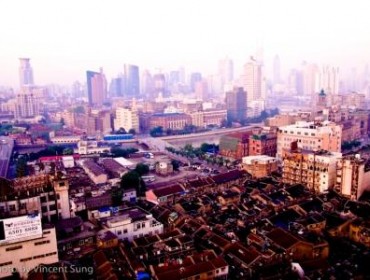
Six years after first moving to Asia and I find myself becoming lazy. Lazy in my desire to care about China’s track record with respect to abusing human rights, purposely manipulating its currency and just about everything Fox News blames China for. The laziness comes out in my compliance at being on the outside looking in. Getting stared at, being cut in line, and putting up with jeering from way too serious local coworkers have become part of my 9-5. I’ve become indifferent to the expensive foreigner markets, the special foreigner price at most restaurants and the local girls ephemeral charms that hide evil intent. Despite all this and heaps more, I still choose People’s Square as the place where I close my eyes and open them to the ever-present Shanghai grey.
Take a walk anywhere and eventually you’ll run into landscapes where run-down buildings meet novel, haste-induced architecture. Building materials decorate half-finished constructions. A Chinese friend once laughingly told me that the haste and lack of quality in the construction biz is done in order to insure future jobs.
Nov 14
By Simon Phillips
On December 4, a motley crew of academics, explorers, and journalists will pioneer a journey which has been about five years in incubatio—following in the footsteps of the ancient Korean monk Wonhyo across the Korean Peninsula.
The pilgrimage is the first one of its kind ever undertaken in honor of Korea’s best-known Buddhist hero, who found enlightenment in Dangjin in the 7th Century while attempting to sail to China.
It will start from Gyeongju—former capital of the Buddhist Silla kingdom where Wonhyo lived, and end in Dangjin, on the west coast of South Chungcheong Province (south of Incheon). The pilgrims will travel mostly on foot along provincial roadways and mountain-trails.
Oct 06
By 3WM
After months of ratcheted up pressure on forums and then via 3WM and finally through the K
orea Herald, MBC news ran a story this week about the scam at Zenith Travel. 3WM broke the story this week that Zenith Travel has now been shut down. We will continue to cover the legal pursuits of claimants as they develop.
The MBC clip explains the exchange of money for expected future travel and includes undercover camera footage of a visit by one of the scam victims and further footage of an attempted call to complain to Korean authorities. In the end it explains that the head of the agency is being investigated by the police.
Sep 05
By Belle Crawford
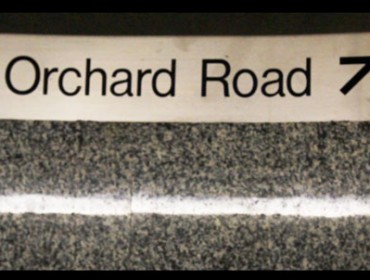
In Singapore we met a blind musician who plays a keyboard and sings in the underground near Orchard Road. Unlike Ray Charles or Stevie Wonder, this subway musician doesn’t hide his oddly shaped eyes with sunglasses. In many ways, his eyes are a part of his act; he wants his listeners to be conscious of his disability, and if there is a twinge of manipulation to his advertising his condition (many buskers know that pitiable circumstances often elicit payment), there is also more than a twinge of pride in the challenges he’s overcome. His presence in the metro is a clear statement about self-sufficiency.
The blind musician is well known in Singapore. Those we spoke to had affectionate things to say about him: he’d been there as long as anyone could remember, he was endearingly territorial about his pitch, and even if his music wasn’t great, he added character and charm to the underground.
May 16
By Jake Reed
This is Part 2 of Jake’s Chengdu travel. Read Part 1 here.
Chengdu might not be the frat party of China and maybe that’s a good thing. I would hate to think I went to a place just to sample the radial Dionysian outlets where the Sun rises in the East, sets in the West and what follows for me is another gripey hangover. Better to ask what was old China like in this neck of the woods? Well, Chengdu did happen to be in possession of the Tao which preceded Buddhism and is creating wonders still in effect today. Next to a KFC on any given street here you can yourself gazing into a lush garden tendered by skin headed, peace mongering Asians.
Apr 11
By Sam Sheppard

Overwhelmingly, at least until the earthquake struck, the Koreans I met chose to ignore Japan as much as possible, whilst the Japanese seemed to have grown used to life without the Hermit Kingdom. From this perspective, it is worth remembering that they did, until relatively recently, move in very different circles. Being the first Asian nation to industrialise, the Japanese have been a prominent international force for many years, only joined by Korea in its capacity as an ‘Asian Tiger’ with high living-standards, education levels, economic growth, and technical proficiency, from the late-twentieth century onwards.
Apr 04
By Sam Sheppard

Using my JR Rail Pass to the fullest, I was able to take in Hiroshima, Himeji, Kyoto, Mishima, Osaka, Nara, and Nagoya during my stay, alongside brief stopovers in Fukuoka and Kobe. In hindsight, I was immensely and unknowingly fortunate, as I largely avoided the area directly affected by March’s events, thereby preserving a margin of validity. In this fell swoop, then, I trudged around five more cities than I have in Korea – despite my being here for the last six months – all the time searching for the Japan I’d grown up with. Now, I am fully aware of how pretentious that sounds as a phrase, having absolutely no Japanese ancestry or previous history with the country. However, I should point out that as a younger, marginally nerdier man, Japan was perhaps the one foreign-speaking country that seemed to be on constant display.
Mar 28
By Joshua Richman

Korea’s green tea, like its ginseng, is excellent. I could have written about Art Street without visiting again, but the taxi dropped me off in the vicinity and I felt like a cup of tea. Later, I’d make sure my facts were correct about Bosung Plantation’s production. I was not happy with these two paragraphs and spent hours once I got back to Seoul trying to come up with something stronger. A basic rule of travel writing is that you try to make people feel, smell, taste, hear, and touch whatever you’re writing about. Even after multiple revisions these paragraphs seemed flat. Writing in second person is tricky. It’s hard not to write ‘you’ every other sentence because when you do use you too much, you won’t get published nor will you get paid.
Mar 21
By Joshua Richman

I could not write about the two things of real interest at Kwangju’s National Museum. The first was the location itself. The building and landscaping around it were well done. A long promenade lined with landscaped trees and blooming flowers leads up granite steps to the huge sloped-roofed museum. Stylish tinted windows and mighty wooden crossbeams added a simplistic yet modern touch, but no one goes to a museum to look at its exterior. It’s what’s on the inside that counts: a parable that applies to museums as well.
Recent Comments